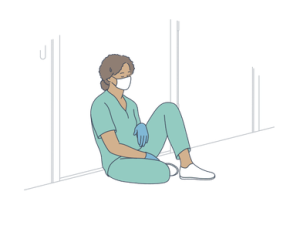
Module 5: Organizational Strategies to Prevent Burnout

- Description
- Curriculum
- Reviews
This module focuses on organisational strategies to prevent burnout in healthcare settings. Instead of addressing stress only at the individual level, it examines the structural and systemic factors that shape daily work conditions.
Participants will explore key organisational drivers of burnout, including high workload, limited autonomy, inefficient workflows, and unclear processes. The module emphasizes how these factors are not isolated issues, but part of broader organisational systems that directly affect staff wellbeing and performance.
Through practical examples and guided activities, participants will learn how to identify organisational risks, improve workflows, and apply simple, realistic strategies to reduce stress in their teams. The module also introduces the use of basic monitoring tools, such as feedback loops and surveys, to detect psychosocial risks early.
Overall, the module supports a shift from reactive responses to proactive, system-level prevention of burnout.
-
2
 Lesson 1: Organisational Burnout as a Systemic Phenomenon
Burnout has traditionally been viewed as an individual problem resulting from personal stress, inadequate coping strategies, or a lack of resilience. However, contemporary research increasingly recognises burnout as a systemic organisational phenomenon shaped by workplace conditions, organisational culture, leadership practices, and structural factors. In healthcare settings, burnout often emerges when chronic job demands consistently exceed the resources available to employees, creating prolonged physical, emotional, and psychological strain.
Understanding burnout as an organisational issue shifts the focus from solely supporting individual workers to addressing the workplace systems and conditions that contribute to stress and exhaustion. This perspective encourages healthcare organisations to implement preventive strategies that target root causes rather than relying exclusively on individual-level interventions.
-
3
Lesson 2: Organisational Wellbeing and Prevention Strategies
Workload is one of the most significant organisational contributors to burnout. Excessive demands, inadequate staffing, and unrealistic expectations can create chronic stress that negatively affects both employee wellbeing and performance.
Organisations can reduce burnout risk by implementing policies that support sustainable work practices, including:
● Establishing realistic workload expectations.
● Monitoring staffing levels and resource allocation.
● Reducing unnecessary administrative burdens.
● Encouraging regular breaks and recovery opportunities.
● Promoting fair distribution of responsibilities.
● Supporting flexible work arrangements where appropriate.
Effective workload management helps employees maintain productivity while reducing the likelihood of exhaustion and disengagement.
-
4
Lesson 3: Leadership and Organisational Culture
Leadership and organisational culture play a central role in burnout prevention. Even well-designed policies and wellbeing initiatives are unlikely to succeed without supportive leadership, open communication, and a workplace culture that values employee wellbeing. Leaders influence how work is organized, how stress is addressed, and whether employees feel supported and psychologically safe.
A healthy organisational culture promotes collaboration, trust, fairness, and sustainable work practices. In contrast, cultures that normalize excessive workload, discourage help-seeking, or prioritize productivity at any cost can increase burnout risk across teams and departments.
-
5
 Assessment 5This module requires practical application through structured assessment activities. Participants must demonstrate competency through evidence-based evaluation methods that translate knowledge into actionable interventions. Certification Requirements ● Knowledge Assessment: Pass rate ≥50% on written examinations ● Skills Assessment: Demonstrate proficiency ≥50% on performance-based assessments (pilot sessions) ● Competence Assessment: Achieve ≥50% on case analysis Professional Recognition Upon successful completion of all assessments, participants receive a verified certificate in "Healthcare Burnout Resilience Foundations" recognised for continuing professional development across EU healthcare systems. Comprehensive Assessment: Multiple Choice Evaluation Participants must demonstrate competency through evidence-based evaluation methods that translate knowledge into actionable interventions. This assessment evaluates understanding of theoretical frameworks, clinical applications, and evidence-based interventions. Each question tests both conceptual knowledge and practical application ability.
 -
6
Pilot Assessment
The competency assessment methods are designed to evaluate the practical application of knowledge and skills acquired throughout the module. These activities focus on real-world organisational scenarios, enabling participants to analyze workplace challenges, identify psychosocial risks, and propose evidence-based interventions for burnout prevention.
The pilot sessions simulate common healthcare organisational challenges and support the development of applied competencies in workload management, workflow optimization, and psychosocial risk assessment.