
Start off Video
Healthcare delivery is inherently relational. Clinical decisions, patient safety, and emotional sustainability are shaped not only by individual competence but by the quality of interaction within teams. Research consistently demonstrates that communication failures and dysfunctional team dynamics are among the most significant contributors to adverse events and professional strain in healthcare settings (Edmondson, 2018; WHO, 2019). At the same time, well-functioning teams serve as a powerful protective factor against burnout and emotional exhaustion.
This module therefore approaches team communication and peer support not as “soft skills,” but as structural resilience mechanisms embedded within daily practice.
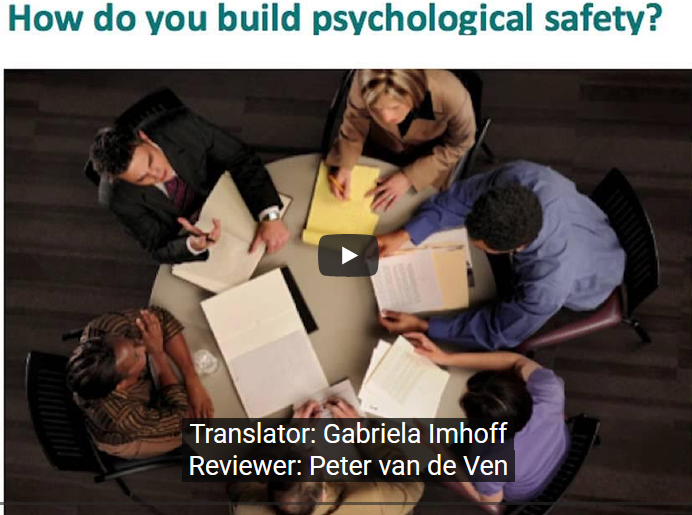
Psychological safety refers to a shared team belief that individuals can speak openly, ask questions, express uncertainty, or admit mistakes without fear of embarrassment, rejection, or punishment (Edmondson, 2018). It does not eliminate accountability or professional standards; rather, it creates an environment in which learning and transparency are prioritized over blame.
AI-generated image created with ChatGPT/OpenAI, 2026
In healthcare, where hierarchies are clearly defined and decisions often carry high stakes, psychological safety is particularly critical. Junior staff may hesitate to question senior physicians. Nurses may refrain from escalating concerns if previous attempts were dismissed. Administrative staff may feel their perspectives are undervalued. Over time, such communication barriers erode trust and increase emotional strain.
When psychological safety is low, silence becomes a coping strategy. Team members withhold doubts, suppress concerns, and internalize stress. When psychological safety is present, clarification is encouraged, uncertainty can be expressed constructively, and emotional burden is shared rather than carried individually. In this sense, psychological safety functions as a collective resilience factor: it reduces isolation, enhances mutual trust, and strengthens patient safety.
Healthcare professionals frequently communicate under acute stress conditions. Emergencies, high patient loads, ethical dilemmas, and time constraints increase cognitive load and physiological activation. Neurobiological research shows that under stress, attentional focus narrows and perspective-taking capacity decreases (McEwen, 2017). As a result, communication may become more directive, less collaborative, and occasionally reactive.
These shifts are not necessarily intentional. They reflect stress physiology. However, when such patterns become habitual, misunderstandings increase, conflict escalates, and emotional tension accumulates within teams.
AI-generated image created with ChatGPT/OpenAI, 2026
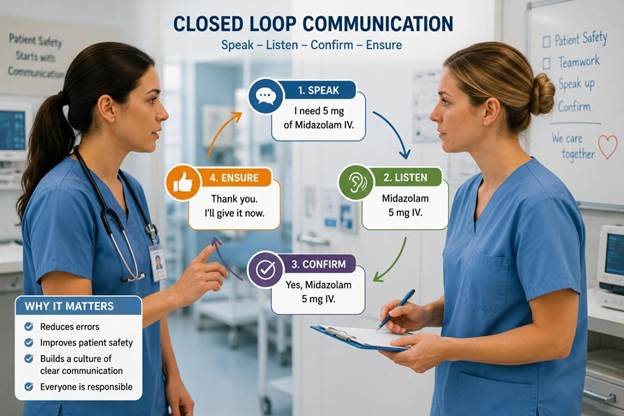
Structured communication techniques can counteract this effect. Clarification loops, explicit check-backs, and closed-loop communication provide cognitive scaffolding in moments of pressure. For example, briefly restating what was understood (“To confirm, we will proceed with…”) reduces ambiguity and prevents escalation. Even short pauses to ensure mutual understanding help maintain professional respect under urgency.
Effective communication under pressure is therefore not spontaneous; it is intentional and practiced. Structured dialogue preserves clarity and psychological safety even in demanding situations.
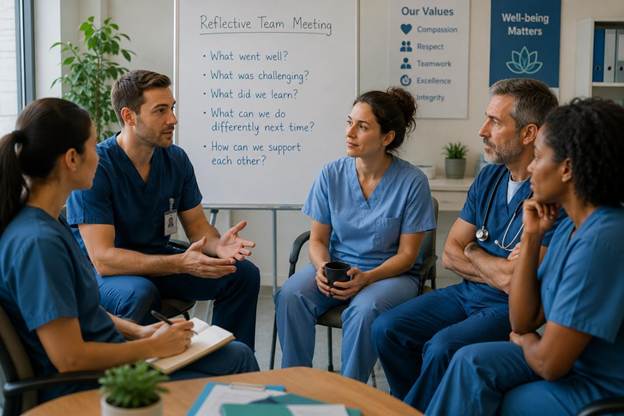
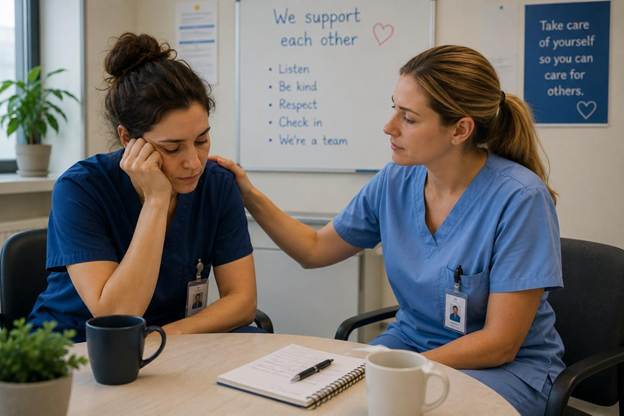
Peer support represents a structured approach to collegial assistance that goes beyond informal conversation. It includes deliberate practices such as buddy systems, brief post-event debriefings, and reflective team formats. Evidence suggests that collegial support significantly reduces emotional exhaustion and strengthens professional engagement (West et al., 2016).
AI-generated image created with ChatGPT/OpenAI, 2026
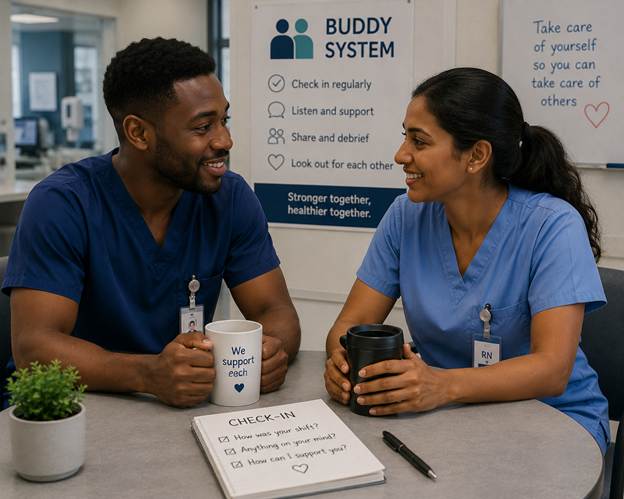
In a buddy system, two colleagues establish brief, regular check-ins. These exchanges may involve simple but meaningful questions: How are you managing this week? Is there anything from today that remains with you? Such structured moments normalize emotional reactions and reduce the internalization of stress.
Brief debriefings after high-pressure events serve a complementary function. Even a three- to five-minute structured reflection can facilitate cognitive processing, emotional normalization, and collective learning. Without such processing, stress tends to accumulate and manifest later as rumination, irritability, or disengagement.
Reflective team formats further enhance shared understanding, particularly in multidisciplinary settings. When professionals from different backgrounds exchange perspectives in a structured environment, role clarity improves and interpersonal tension decreases.
From a resilience perspective, peer support shifts stress from an individual burden to a shared experience. It transforms isolated strain into collective processing, thereby strengthening cohesion and reducing burnout risk.
Healthcare organizations operate within formal hierarchies that are necessary for clarity of responsibility and rapid decision-making. However, hierarchical structures can also create communication asymmetries. Individuals in lower positions may hesitate to challenge decisions or voice concerns, particularly under time pressure.
Such dynamics can foster passive compliance, avoidance of upward feedback, or unaddressed disagreement. Over time, suppressed conflict contributes to frustration and emotional withdrawal.

AI-generated image created with ChatGPT/OpenAI, 2026
Interprofessional diversity adds another layer of complexity. Differences in training, professional identity, and role expectations may produce misunderstandings if not explicitly addressed. Under stress, these differences can escalate into personal conflict rather than remaining task-focused.
Constructive conflict management requires distinguishing between task-related disagreement and personal criticism. Encouraging open dialogue, explicitly inviting alternative perspectives, and establishing norms for respectful challenge enhance both team functioning and psychological safety.
When conflict is addressed early and structurally, it strengthens clarity and trust. When avoided, it increases emotional strain and undermines cohesion.
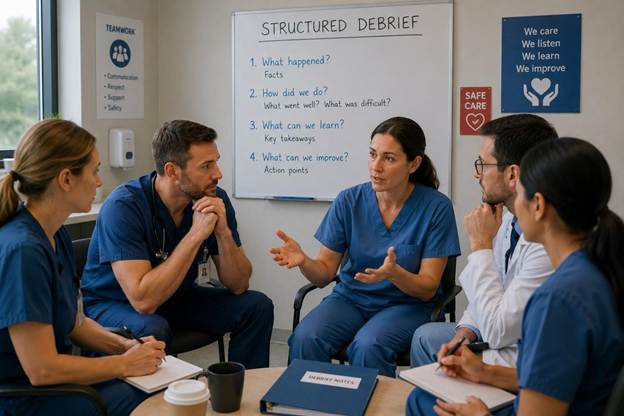
High-pressure events are an unavoidable part of healthcare work. Without structured opportunities for processing, however, teams may carry unresolved tension forward into subsequent interactions. Short, structured debriefs support cognitive integration and emotional recovery.
A brief debrief typically addresses three elements:
● What occurred?
● How did it affect us?
● What can we learn or adjust?
AI-generated image created with ChatGPT/OpenAI, 2026
Even within five minutes, such structure prevents rumination and restores alignment. It signals that emotional reactions are legitimate and that learning is continuous.
Debriefing thus functions as both a communication strategy and a resilience intervention. It enhances team coherence while preventing cumulative stress accumulation.
Integrative Perspective
Team communication and peer support are central components of organizational resilience. Psychological safety enables transparency and learning. Structured communication under pressure preserves clarity and respect. Peer support reduces emotional isolation. Conscious management of hierarchy and conflict strengthens cohesion.
In healthcare systems characterized by sustained demand, these practices are not optional enhancements; they are protective structures. Teams that deliberately cultivate psychological safety and peer support are better equipped to manage complexity, prevent error escalation, and sustain professional well-being over time.
AI-generated image created with ChatGPT/OpenAI, 2026
Edmondson, A. C. (2018). The fearless organization: Creating psychological safety in the workplace for learning, innovation, and growth. Wiley.
Edmondson, A. C. (1999). Psychological safety and learning behavior in work teams. Administrative Science Quarterly, 44(2), 350–383. Psychological Safety and Learning Behavior in Work Teams – Amy Edmondson, 1999
Leonard, M., Graham, S., & Bonacum, D. (2004). The human factor: The critical importance of effective teamwork and communication in providing safe care. Quality and Safety in Health Care, 13(Suppl 1), i85–i90. The human factor: the critical importance of effective teamwork and communication in providing safe care | BMJ Quality & Safety
Manser, T. (2009). Teamwork and patient safety in dynamic domains of healthcare: A review of the literature. Acta Anaesthesiologica Scandinavica, 53(2), 143–151.Teamwork and patient safety in dynamic domains of healthcare: a review of the literature – MANSER – 2009 – Acta Anaesthesiologica Scandinavica – Wiley Online Library
McEwen, B. S. (2017). Neurobiological and systemic effects of chronic stress. Chronic Stress, 1, 1–11. Neurobiological and Systemic Effects of Chronic Stress – Bruce S. McEwen, 2017
Salas, E., Sims, D. E., & Burke, C. S. (2005). Is there a “Big Five” in teamwork? Small Group Research, 36(5), 555–599. Is there a “Big Five” in Teamwork? – Eduardo Salas, Dana E. Sims, C. Shawn Burke, 2005
West, C. P., Dyrbye, L. N., Erwin, P. J., & Shanafelt, T. D. (2016). Interventions to prevent and reduce physician burnout: A systematic review and meta-analysis. The Lancet, 388(10057), 2272–2281. Interventions to prevent and reduce physician burnout: a systematic review and meta-analysis – The Lancet
World Health Organization. (2019). Patient safety: Global action on patient safety. WHO.

