Module 9: Applying & Sustaining / Boosting mental resilience for Psychologists/Therapists

- Description
- Curriculum
- Reviews
Module overview
Burnout in psychotherapeutic practice is not only a matter of individual wellbeing—it represents a critical ethical concern when it affects professional functioning and the quality of care provided to clients. This module explores the intersection between self-care, ethical responsibility, and primary prevention, emphasising that maintaining one’s capacity to practice is a core component of professional competence.
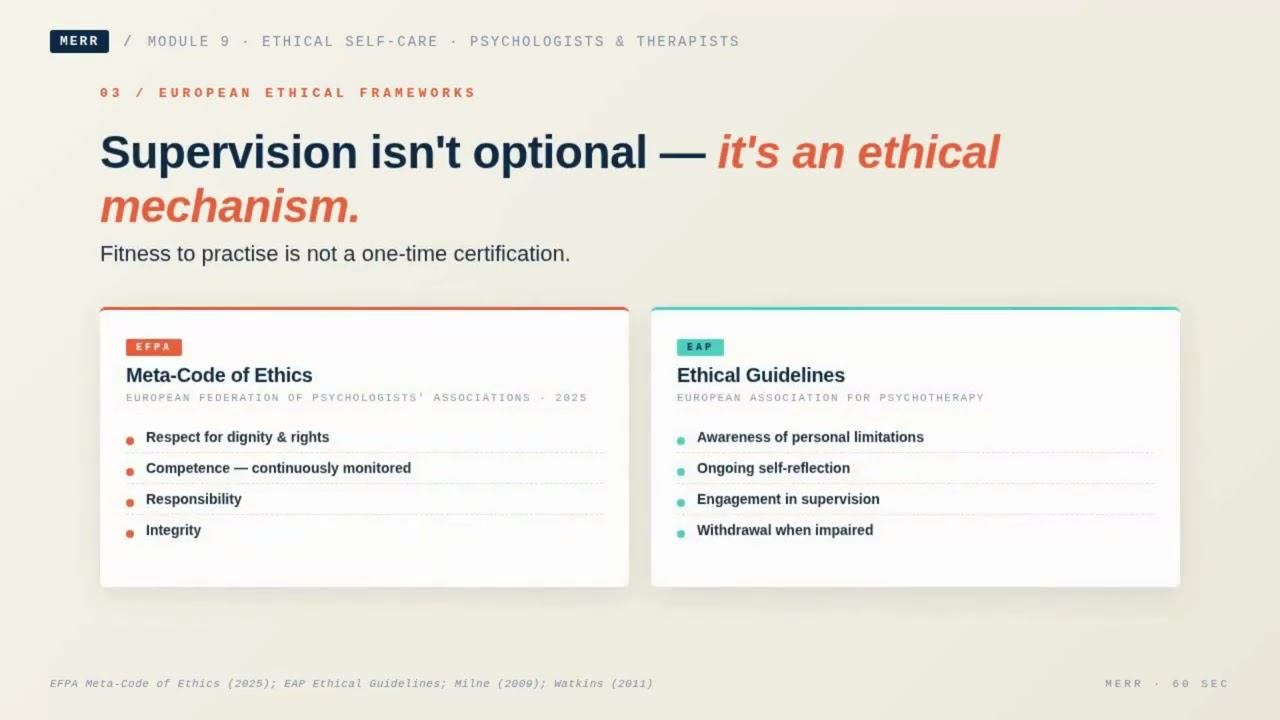
Grounded in European ethical frameworks, including those of the European Federation of Psychologists’ Associations and the European Association for Psychotherapy, the module reframes self-care as an ethical obligation directly linked to fitness to practice, duty of care, and client safety.
Participants will examine how burnout develops gradually through cumulative emotional and cognitive demands, and how it can lead to subtle but significant changes in clinical functioning, including reduced empathy, impaired judgment, and boundary inconsistencies. These changes may increase the risk of ethical breaches and compromise therapeutic effectiveness, often without immediate awareness.
Moving beyond awareness, the module focuses on primary prevention, highlighting the importance of proactively designing sustainable ways of working. Participants will explore practical strategies such as caseload management, structured recovery, supervision, peer consultation, and boundary setting, as well as the role of organisational context in supporting or undermining ethical practice.
A central aim of the module is to support the transition from theoretical understanding to applied, context-based action. Through guided exercises, learners will develop a personalized ethical self-care plan, identifying early warning signs, defining ethical thresholds for action, and embedding small, repeatable prevention strategies into their daily workflow.
This module ultimately positions ethical self-care not as an individual preference, but as a continuous, reflective, and professionally accountable process that safeguards both therapist wellbeing and the integrity of therapeutic work.
-
2
 Lesson 1 : Ethical Responsibility of Self-care
For psychologists and psychotherapists, self-care is an essential component of ethical practice, as it directly affects therapeutic atonement, clinical judgment, and the ability to provide safe and effective care.
-
3
Lesson 2: Ethical Risks of Burnout in Therapeutic Practice
For psychologists and psychotherapists, burnout is not only a wellbeing concern—it becomes an ethical issue when it impairs clinical functioning, reduces therapeutic effectiveness, and increases the risk of harm to clients.
-
4
Lesson 3: Primary Prevention Strategies in Therapeutic Work
Primary prevention focuses on preventing burnout before it develops by proactively designing sustainable ways of working.
Rather than responding to impairment after it occurs, therapists are ethically and professionally responsible for anticipating risk and embedding protective practices into their daily workflow.
-
5
Lesson 4: Personal Ethical Self-care Plan
This unit focuses on translating ethical awareness into concrete, actionable practice.
Sustainable ethical practice does not depend on general intentions (e.g., “I will take better care of myself”), but on specific, context-based actions that can be consistently applied in real clinical settings.
-
6
 Quiz Assessment 9Competency will be assessed through multiple-choice questions, short knowledge checks, and brief case study analyses focused on ethical responsibility, burnout risk, supervision, and fitness to practice. Learners will also complete reflective self-assessment activities and develop a personal ethical self-care plan to demonstrate the practical application of prevention strategies, professional boundaries, and ethical decision-making in therapeutic practice.
 -
7
Pilot Assessment
This module requires practical application through structured assessment activities. Participants must demonstrate competency through evidence-based evaluation methods that translate knowledge into actionable interventions